DarkOrbit – Quarantine Zone (QZ): The Ultimate Group Gate Challenge
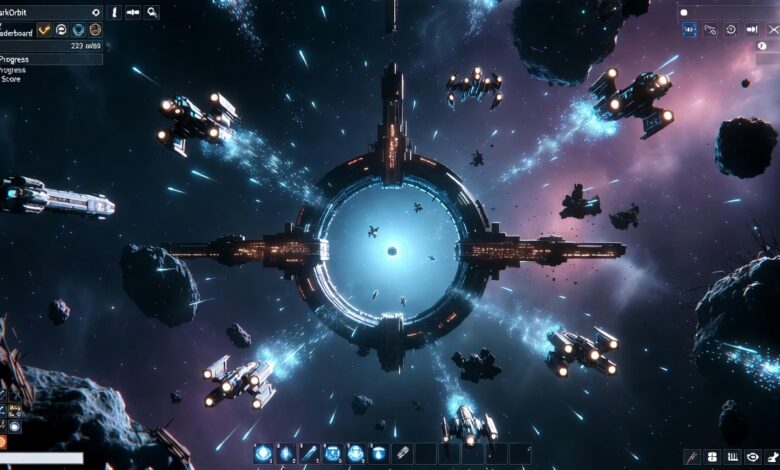
In the ever-expanding universe of DarkOrbit, group-based content has always played a crucial role in shaping the competitive and cooperative aspects of gameplay. Developed by Bigpoint Games, DarkOrbit combines PvP warfare, PvE boss encounters, and strategic ship progression into a persistent online galaxy. Among its most intense and teamwork-focused experiences is the Quarantine Zone (QZ) — a high-level group gate designed to test coordination, communication, and combat efficiency.
The Quarantine Zone is not a simple solo mission or basic alien wave map. It is a group gate, meaning that it requires multiple players working together to survive waves of dangerous infected enemies and eventually defeat a powerful boss threat. For many pilots, QZ represents one of the most rewarding and adrenaline-filled PvE challenges in the game.
This article explores the Quarantine Zone in full detail — including its structure, enemies, strategies, ship roles, rewards, and why it remains one of DarkOrbit’s most respected group activities.
What is the Quarantine Zone (QZ)?
The Quarantine Zone (QZ) is a special instanced group gate in DarkOrbit where players enter a restricted combat area overrun by highly aggressive alien entities. The word “quarantine” suggests containment — and that is exactly the concept behind the gate: players must enter an infected sector and eliminate the spreading alien threat before it becomes uncontrollable.
Unlike solo Galaxy Gates, QZ requires a team of players, typically between 4–8 members, depending on server balancing and difficulty scaling. The enemies inside are stronger, more coordinated, and designed to overwhelm unprepared teams.
Core Concept of QZ
The Quarantine Zone revolves around three main pillars:
- Wave-based survival
- Boss encounter mechanics
- Team coordination
Players cannot simply rush in and spam high-damage ammunition. Success in QZ depends on structured teamwork, defined ship roles, and intelligent resource management.
Entry Requirements
Because QZ is a high-level group gate, players usually need:
- Advanced ship configuration
- High shield strength
- Strong laser loadouts
- Level requirement (varies by server updates)
- Group formation before entry
Entry may require:
- Gate components
- Uridium
- Event-specific keys (during special rotations)
The cost of entry ensures that players come prepared and committed.
Structure of the Quarantine Zone
The QZ gate is divided into multiple stages.
Phase 1 – Initial Infection Waves
Upon entry, teams face:
- Fast-moving infected NPCs
- Medium-damage swarm units
- Shield-penetrating enemies
The early waves test:
- Reaction time
- Target prioritization
- Basic team coordination
Enemies may spawn from multiple directions, forcing players to avoid clustering too tightly.
Phase 2 – Escalation Stage
Difficulty increases significantly.
New mechanics may include:
- Enemies that explode upon death
- NPCs that weaken player shields
- Damage-over-time (DoT) effects
- Aggressive rush attackers
At this stage, communication becomes critical. Teams must:
- Focus fire priority targets
- Protect weaker ships
- Maintain formation
- Avoid unnecessary ammunition waste
Mistakes here often result in ship destruction.
Phase 3 – Mini-Boss Encounters
Before the final boss, QZ introduces mini-boss enemies with:
- Massive HP pools
- Area-of-effect attacks
- Summoning mechanics
- Regeneration abilities
Mini-boss fights demand:
- Sustained DPS
- Shield rotation
- Repair timing
- Position awareness
This stage separates organized teams from random groups.
Phase 4 – Final Boss: The Quarantine Overlord
The final encounter in QZ is the highlight.
The boss typically features:
- Extremely high HP
- Heavy AoE blasts
- Drone summons
- Target-switching AI
- Shield regeneration cycles
The boss may change attack phases based on remaining health.
Phase Mechanics Example:
- 100–70% HP: Standard heavy attacks
- 70–40% HP: Summons infection swarms
- 40–10% HP: Increased attack speed
- Final phase: Massive AoE burst
Teams must stay calm and maintain formation discipline.
Recommended Team Composition
Success in QZ depends heavily on group structure.
1. Tank Ship
- High shield configuration
- Draws enemy aggression
- Absorbs heavy damage
2. Damage Dealers (DPS)
- Maximum laser damage
- Focus on boss and priority targets
- Use high-tier ammo strategically
3. Support/Repair Ship
- Shield boosters
- Repair drones
- Group sustain modules
4. Flexible Hybrid Role
- Can switch between DPS and support
- Reacts to emergency situations
Balanced teams outperform random high-damage groups.
Strategic Tips for Quarantine Zone
1. Focus Fire
Always eliminate high-threat enemies first.
2. Ammo Management
Do not waste premium ammunition in early waves.
3. Maintain Spacing
Avoid stacking together during AoE phases.
4. Rotate Cooldowns
Coordinate shield boosts and repair abilities.
5. Communicate Constantly
Voice chat dramatically increases survival rates.
6. Know When to Retreat Slightly
Temporary repositioning prevents full-team wipes.
Rewards from Quarantine Zone
QZ is popular because of its strong reward structure.
Typical rewards include:
- Large amounts of Uridium
- High experience (XP)
- Honor points
- Rare crafting materials
- Advanced laser upgrades
- Special modules
- Event-based exclusive items
Some rotations of QZ may also provide:
- Ranking leaderboard rewards
- Cosmetic ship designs
- Title badges
Because it is group-based, rewards are often distributed individually, encouraging participation rather than competition within the team.
Why QZ is Important in DarkOrbit
The Quarantine Zone strengthens key gameplay elements:
1. Encourages Teamwork
Players must rely on allies rather than solo power.
2. Promotes Active Alliances
Alliances schedule QZ runs together.
3. Boosts Player Retention
High-reward PvE keeps veterans engaged.
4. Improves Skill Development
Teaches positioning, coordination, and efficiency.
Comparing QZ to Other Gates
| Feature | Quarantine Zone | Standard Galaxy Gate |
|---|---|---|
| Solo Entry | No | Yes |
| Team Required | Yes | No |
| Difficulty | High | Medium–High |
| Boss Mechanics | Advanced | Basic–Moderate |
| Reward Type | Group PvE focused | Solo progression |
QZ stands out because of its cooperative design.
Common Challenges in QZ
Despite its popularity, QZ presents challenges:
- Requires strong coordination
- Can punish undergeared players
- High repair cost if wiped
- Demands time commitment
- Skill gap between players
However, overcoming these challenges is what makes victory satisfying.
Community Perspective
Within the DarkOrbit community, QZ is respected as:
- A “true teamwork test”
- A training ground for elite pilots
- A resource-efficient group grind
- A social bonding activity for alliances
Many veteran players consider QZ runs one of the most enjoyable PvE experiences in the game.
Advanced Strategy Insights
Experienced teams often:
- Pre-assign callouts
- Time shield cycles precisely
- Use alternating damage bursts
- Optimize formations (triangle spread for AoE phases)
- Save strongest ammo for final phase
These micro-optimizations significantly increase completion speed.
Event Variations of QZ
Sometimes QZ appears during:
- Special alien invasion events
- Anniversary celebrations
- Seasonal rotations
- Limited-time reward boosts
During these periods, rewards are often increased, making QZ even more attractive.
Final Thoughts
The Quarantine Zone (QZ) in DarkOrbit represents one of the most intense and cooperative PvE challenges available in the game. It combines wave survival, strategic boss mechanics, team coordination, and rewarding loot into one powerful experience.
Unlike solo gates where individual strength dominates, QZ proves that teamwork, communication, and structured roles are the true keys to success in the galaxy.
For alliances seeking to strengthen their members, for pilots wanting high-tier rewards, and for players who enjoy tactical combat under pressure, the Quarantine Zone is an essential part of the DarkOrbit journey.
Mastering QZ is not just about defeating infected aliens — it is about proving that your team can survive under pressure and emerge victorious from one of the most dangerous sectors in space.